For the indico website, click here
CosmoVerseSchool@Sofia (25-29 May 2026)
Our understanding of the Universe is at a turning point with the predictions of the standard model of cosmology (or concordance model), and the observations from different surveys showing tensions in several key areas. The disagreement is expressed in the value of cosmic expansion as well as in the growth of large-scale structure in the Universe. New cosmological surveys, many of which are European, may expose tension in additional areas of the concordance model. The question of cosmological tensions can be confronted in a number of ways. Firstly, survey data needs to be further analyzed for potential systematic uncertainties or biases. It would also be interesting to explore predictions from possible combined survey data, which is something survey collaborations cannot normally explore. Secondly, there have been numerous advances in approaches to data analysis and statistical approaches, some of which provide less dependence on cosmological models to make cosmological parameter estimates. Lastly, there are a plethora of new proposals from fundamental physics which range from novel neutrino physics to dark energy proposals (and others) which may contribute to a solution to the cosmological tensions problem. These represent the three research themes through which cosmological tensions will either be alleviated or resolved.
The main aim of CosmoVerse is to establish a synergy between these research areas and foster a sustainable network based on interdisciplinary research in order to confront the growing challenges of tensions in cosmological survey data. CosmoVerse will take a harmonized approach involving all key communities.
CosmoVerseSchool@Sofia 2026 is the second school by the CosmoVerse COST Action and centers on the interface of observational measurements and data analysis of these data sets. Within CosmoVerse, this features the intersection of Working Groups 1 (Observational Cosmology and systematics) and 2 (Data Analysis in Cosmology) (see here for more information). The School will cover lectures and training in analyzing observational data sets in the context of cosmological parameter estimates. This is connected to the CosmoVerse Data Challenge.
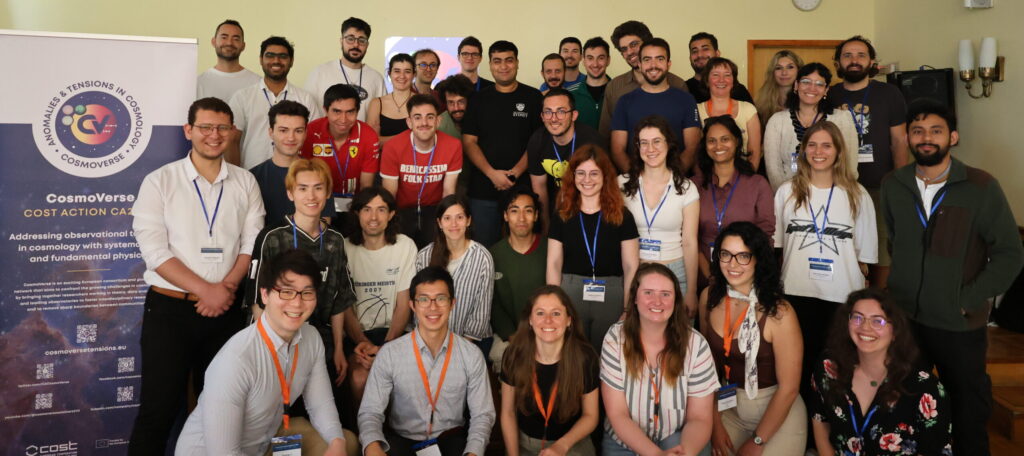
Venue
The school will be held at the Institute of Mechanics of the Bulgarian Academy of Sciences (IMech-BAS), located at Acad. Georgi Bonchev St. 4A, 1113 Sofia, Bulgaria. The sessions will take place in the conference hall on the top floor of the institute (Map Link).
Lectures
Theme A: Distance ladder and Cepheids
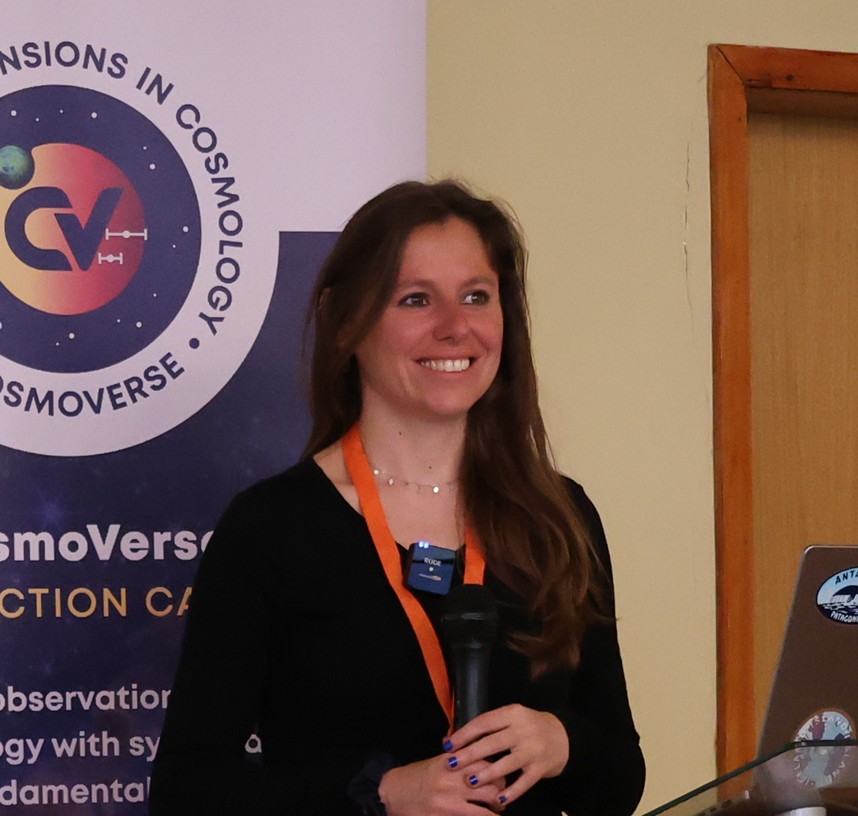
Louise Breuval
The Hubble Tension & the distance ladder(s)
This lecture introduces the Hubble Constant (H0) and the different approaches to measure its value empirically, in the local universe, and to predict it based on CMB data and assuming the Lambda-CDM model. It covers the Cepheid and SNIa distance ladder, additional distance measurement methods, and recent improvements to the local value from HST, JWST and Gaia data.
Abstract
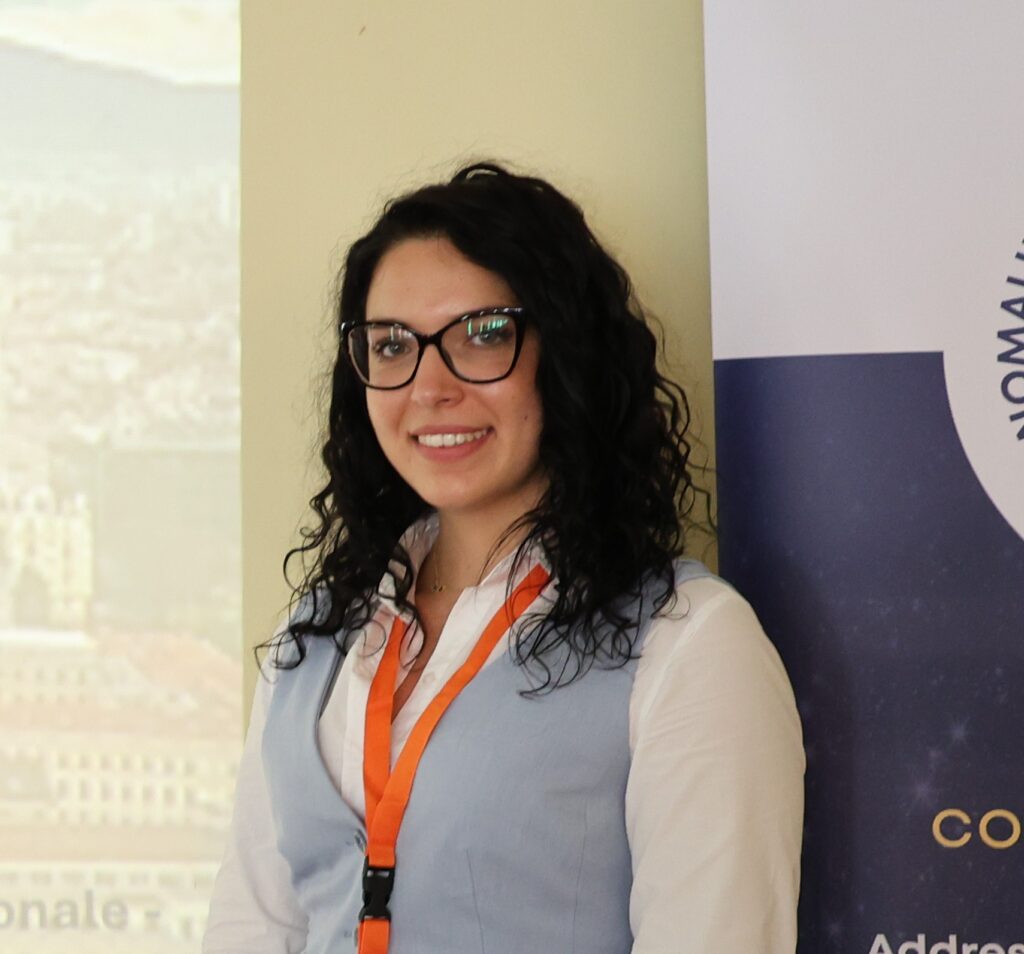
Teresa Sicignano
Measuring astronomical distances with Cepheid variables
Cepheid variable stars are among the most important distance indicators in modern astronomy. In this lecture, we introduce the Period–Luminosity relation discovered by Henrietta Leavitt, its physical origin, and its role in the cosmic distance ladder. We discuss the effects of extinction and metallicity, the use of Wesenheit relations, and how pulsating stars are used to calibrate astronomical distances with Gaia parallaxes. The lecture concludes by showing that pulsating stars are not only fundamental for precision cosmology, but also powerful probes of stellar physics, stellar evolution, and Galactic structure.
Abstract
Louise Breuval
The Cepheid metallicity dependence
This lecture describes the implications of the Cepheid metallicity dependence on the measured distances, and its (now limited) impact for the Hubble Constant. Different independent methods are introduced, such as comparing Period-Luminosity intercepts in the Milky Way and Magellanic Clouds, or using the radial abundance gradient in a given galaxy. Recommendations to avoid biases are given, based on previously published analyses. The second part of the lecture focuses on metallicity measurements from HR spectra.
Abstract
Teresa Sicignano
Measuring stellar abundances
In this lecture we introduce the fundamentals of stellar spectroscopy and abundance analysis. We discuss how stellar spectra are formed, the physical information encoded in spectral lines, and the main techniques used to derive stellar atmospheric parameters and chemical abundances, including the Curve of Growth and Spectral Synthesis methods. Particular emphasis is placed on the role of spectroscopy in studying variable stars and improving the calibration of the cosmic distance scale.
Abstract
Theme B: Type of the Reg Giant Branch (TRGB)
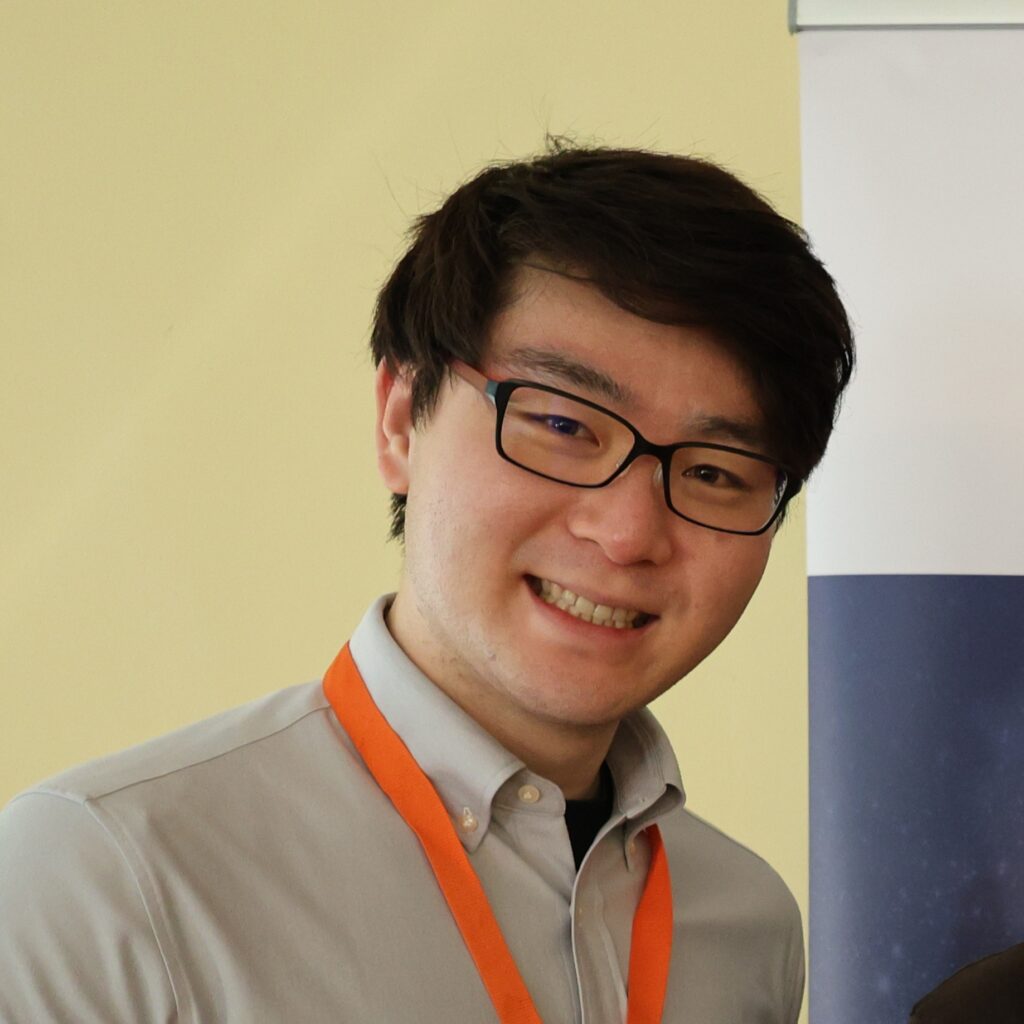
Siyang Li
Introduction to the Tip of the Red Giant Branch: Theories and Observations
This lecture builds the physical case for the Tip of the Red Giant Branch (TRGB) as a distance indicator. Starting with the evolution of low-mass, old stars, it explains how electron degeneracy pressure in the stellar core sets up the helium flash — a runaway thermonuclear event that occurs at a nearly universal core mass (~0.50 M☉) regardless of a star’s age or mass. This is why the TRGB has an almost constant luminosity across different stellar populations, making it a reliable standardizable candle. The lecture then turns to observational practice: why astronomers observe in the I-band, how to select clean target fields in galaxy halos, and how the TRGB is actually measured in real data — smoothing noisy star counts (GLOESS) and detecting the sharp luminosity edge (Sobel filter), including how measurement uncertainties are estimated via bootstrap resampling.
Abstract
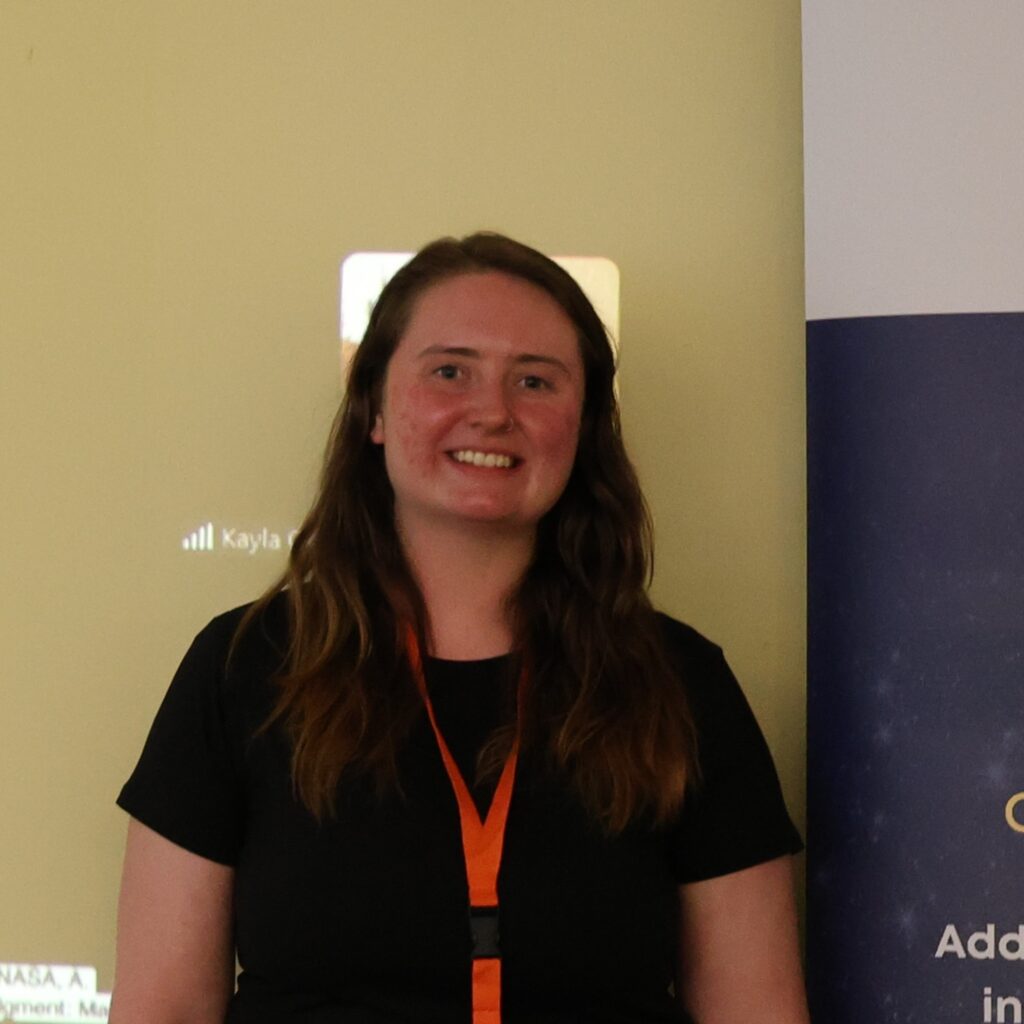
Kayla Owens
How to Measure Stars: Methods and Challenges of Photometry
coming soon
Abstract
Siyang Li
Measuring Distances to Type Ia Supernova Host Galaxies with the TRGB
This talk shows how a single TRGB measurement becomes a cosmological distance and, ultimately, a measurement of the Hubble constant (H₀). It walks through the calibration chain — anchoring the TRGB’s absolute brightness using the geometric distance to NGC 4258 (measured via a water megamaser) — and then applying that calibration to galaxies that have hosted Type Ia supernovae, linking the TRGB rung of the distance ladder to the supernova rung. The lecture surveys the major sources of systematic uncertainty in TRGB measurements (population effects, star blending/crowding, dust extinction, and methodological choices) and how the field handles each. It closes with an overview of the major TRGB research programs (CCHP, EDD, CATS) and their differing H₀ results, framing the “Hubble tension” debate and introducing the CosmoVerse Data Challenge notebook pipeline.
Abstract
Theme C: Type Ia Supernova
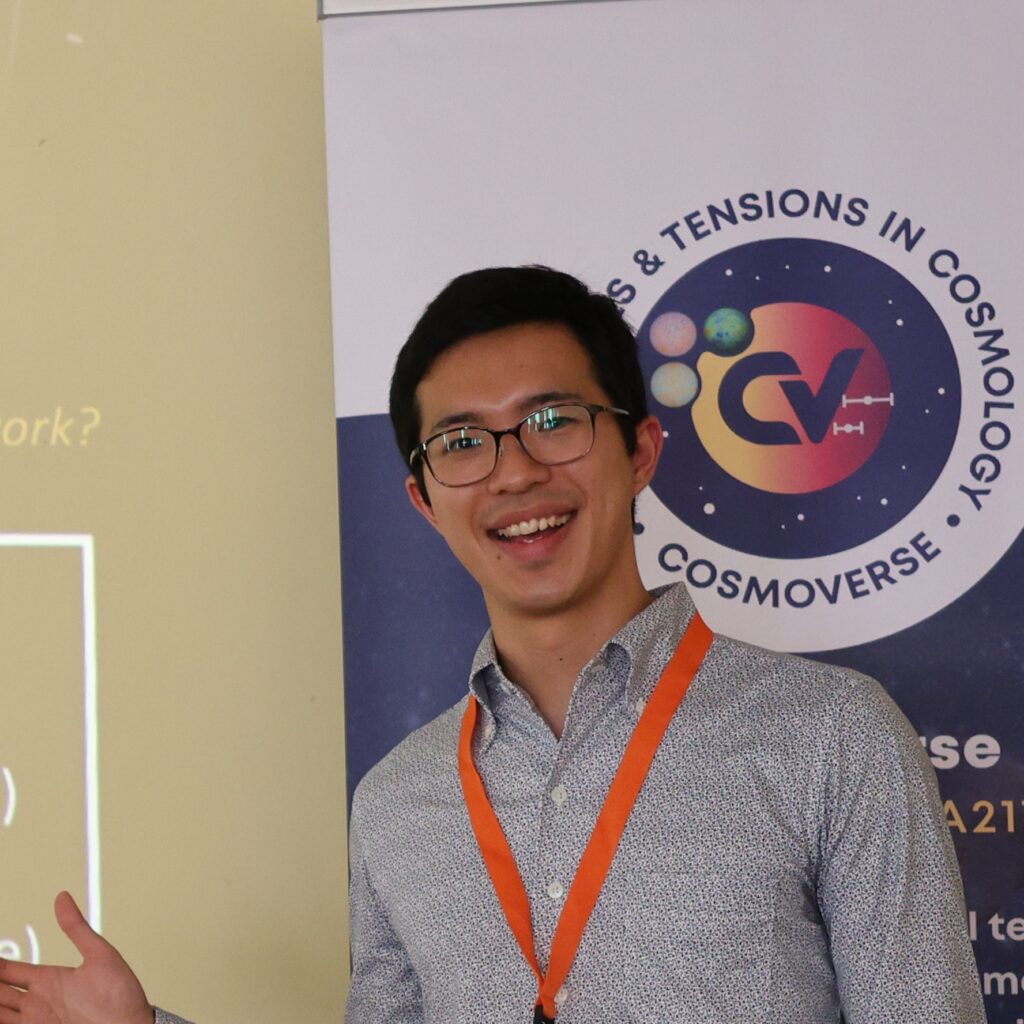
Yukei Murakami
Type Ia Supernova as a Standardizable Candle
coming soon
Abstract
Yukei Murakami
Systematics in SNe Ia Cosmology & Outlook in the Era of LSST, Roman, and Euclid
coming soon
Abstract
Lightning talk winner
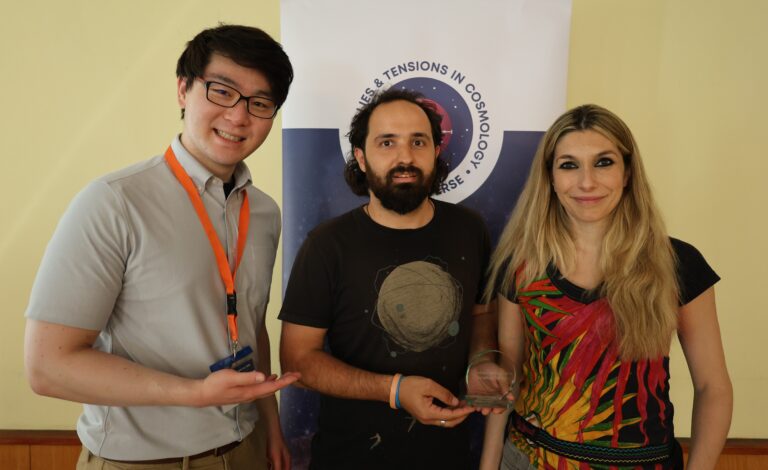
Umut Emek Demirbozan
An AI-Assisted personalized literature explorer: Contextual Language model Assisted arXiv Retrieval (CLArXivR).
An AI-Assisted literature explorer: Contextual Language model Assisted arXiv Retrieval (CLArXivR). I will present the CLArXivR package, which assists researchers in selecting and prioritizing abstracts based on their publication history and a domain library defined by the researcher. The package automatically identifies the most similar papers, ranks them, and provides comparative summaries of the closest matches, enabling researchers to quickly assess relevance, connection and identify literature gaps. CLArXivR can also be used in combination with AI agents to automatically select abstracts related to specific topics, such as the Hubble tension, and to support rapid hypothesis generation and scientific exploration.
Lecturers
Siyang Li (University of California, Berkeley, USA)
Yukei Murakami (Johns Hopkins University, USA)
Kayla Owens (University of Chicago, USA)
Louise Breuval (Space Telescope Science Institute, Baltimore, USA)
Teresa Sicignano (Scuola Superiore Meridionale – INAF-OACN, Italy)
Important dates
1 November 2025: Registration and abstract submission opens
1 February 2026: Registration and abstract submission deadline
25-29 May 2026: School days
27 May 2026: Conference Dinner
28 May 2026: Public Lecture
SOC
Siyang Li (University of California, Berkeley, USA)
Jackson Levi Said (University of Malta, MT)
Eleonora Di Valentino (Sheffield University, UK)
Noemi Frusciante (UNINA, IT)
Agnieszka Pollo (National Center for Nuclear Research, PL)
Marika Asgari (Newcastle University, UK)
LOC
Denitsa Staicova (Institute for Nuclear Research and Nuclear Energy, Bulgarian Academy of Sciences)
Lilia Anguelova (Institute for Nuclear Research and Nuclear Energy, Bulgarian Academy of Sciences)
Michail Stoilov(Institute for Nuclear Research and Nuclear Energy, Bulgarian Academy of Sciences)
Petar Danev(Institute for Nuclear Research and Nuclear Energy, Bulgarian Academy of Sciences)
Hristo Tonchev(Institute for Nuclear Research and Nuclear Energy, Bulgarian Academy of Sciences)
Funding
The School has no registration fees for all participants. The CosmoVerse COST Action will provide funding (travel & subsistence) to a number of students in attendance. However, if alternative funding is available, we ask that students take this into consideration.
Getting to Sofia
Sofia, the capital of Bulgaria, is easily accessible by air, rail, and bus.
By air:
Sofia International Airport “Vasil Levski” (SOF) is located about 10 km from the city center. It has direct connections to most major European cities. The city center can be reached in about 20–30 minutes by taxi, metro, or bus.
-
Metro: Line M4 connects Terminal 2 directly to the city center (about 30 min, ticket €0.80 / 1.60 BGN) (map).
-
Bus: Bus 84 and 184 connect both terminals to central Sofia (ticket €0.80 / 1.60 BGN) (map).
-
Taxi: The official taxi operator OK Supertrans can be found outside the arrivals area (approx. €10–15 / 20–30 BGN to the center).
By train or bus:
Sofia Central Railway Station and the nearby Central Bus Station offer international and domestic connections. Both are directly linked to the city’s metro and public transport network.
Public transport:
Sofia’s public transport includes metro, trams, and buses. Single-ride tickets cost about €0.80 (1.60 BGN). Daily and multiday passes are also available.