What is your name, affiliation, academic position, and job title?
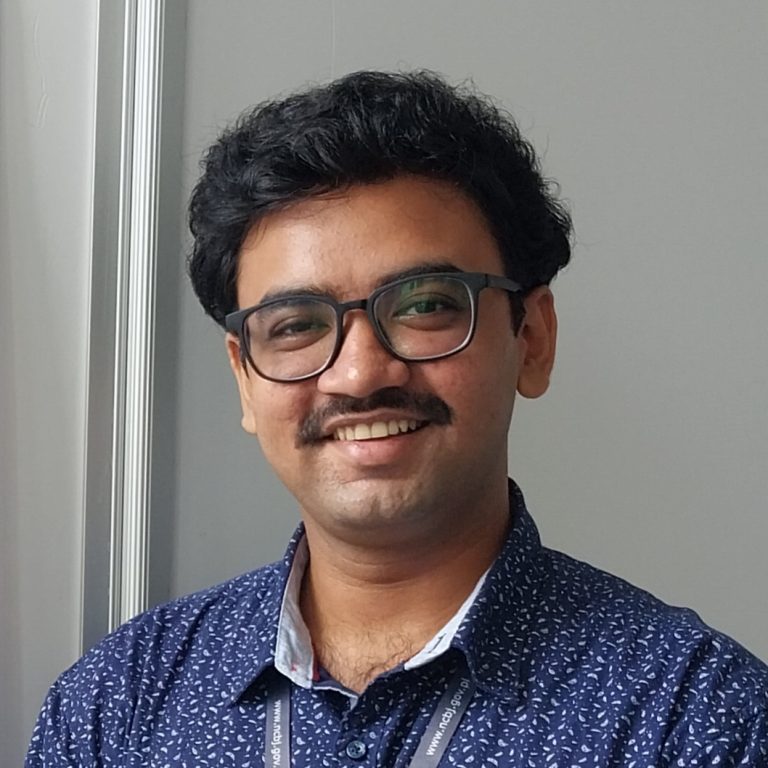
My name is Rahul Shah. I am a Ph.D. student at the Physics and Applied Mathematics Unit of the Indian Statistical Institute (ISI), Kolkata, India.
What is your journey?
I grew up in Howrah, near Kolkata, India. I completed my undergraduate studies in Physics at St. Xavier’s College, Kolkata, followed by a Master’s degree in Physical Sciences at the Indian Association for the Cultivation of Science. I then joined the Ph.D. programme at the Indian Statistical Institute. Further details are available at https://rahulshah1397.github.io/
What is your field of research and/or what project are you involved in?
My research lies at the intersection of cosmology, data analysis, and computational methods. My doctoral work focuses on understanding the origin of cosmological tensions, such as discrepancies in the Hubble constant (H₀) and the clustering amplitude (S₈). I combine machine-learning-based, model-independent techniques with conventional, model-dependent approaches to analyse cosmological data across a range of datasets and theoretical models.
What are your research plans?
My broader goal is to build a data-driven, multi-probe framework for precision cosmology. In the near future, I plan to develop joint analyses of diverse probes such as supernovae, baryon acoustic oscillations, gravitational-waves, and the cosmic microwave background, to reconstruct the expansion history of the Universe and the growth of cosmic structures with minimal assumptions. I am also interested in systematically testing extensions beyond the standard Lambda Cold Dark Matter (ΛCDM) model using current and upcoming datasets, while carefully accounting for systematics and cross-calibration effects.
How does CosmoVerse fit within those plans?
CosmoVerse has played, and continues to play, a crucial role in my research plans by providing a collaborative platform that brings together theorists, observers, and data analysts working on cosmological tensions from complementary perspectives. Being part of all three working groups has allowed me to engage with problems ranging from fundamental theory to observational systematics. My participation in the CosmoVerse White Paper, the Data Challenge, meetings such as CosmoVerse@Kraków, and regular online activities such as journal clubs and seminars has been invaluable in shaping how I think about tensions, and cosmology more broadly.
What are the most exciting open questions in your research area?
One of the most exciting open questions in cosmology is whether current tensions between different measurements point to new physics beyond the standard ΛCDM model, or instead arise from subtle, previously unaccounted-for systematics in the data. Closely related is the challenge of combining heterogeneous probes in a consistent and largely model-agnostic way. Understanding how different datasets cross-validate, or contradict, each other may ultimately be key to resolving these issues and building a more robust picture of the Universe.
What advances or new results are you excited about or looking forward to?
I am particularly excited about the wealth of high-precision data expected from ongoing and upcoming cosmological surveys, including not only established probes but also novel ones such as gravitational waves and the 21-cm signal from the epoch of reionisation. Cosmology is increasingly becoming a robust, data-driven field, and the next generation of observations will enable independent and complementary tests of cosmic expansion and structure formation. Together with methodological advances that allow different probes to be combined consistently, these developments offer an exciting opportunity to address some of the most pressing open questions in the field.
What is your view on cosmic tensions? How does your work connect with this open question in the community?
I view cosmic tensions as valuable stress tests of our cosmological understanding rather than as isolated discrepancies. They may point to new physics beyond the standard ΛCDM model, but they could also arise from subtle systematics, modelling assumptions, or cross-calibration issues between datasets. Understanding their origin therefore requires both theoretical openness and rigorous, data-driven scrutiny.
My work contributes to this effort through the use of independent probes, model-independent reconstruction techniques, and systematic tests of extended cosmological models. By combining conventional statistical methods with machine-learning approaches, I aim to assess whether apparent discrepancies persist across different datasets and assumptions, and to clarify what these tensions reveal about both the Universe and our inference methods.
What role do you think a community network like CosmoVerse can play in developing theoretical astroparticle physics and cosmology?
A community network like CosmoVerse plays a crucial role in addressing problems that cut across traditional subfields, such as cosmological tensions. By bringing together theorists, observers, and data analysts, it enables meaningful cross-disciplinary dialogue and collaboration. CosmoVerse also provides a shared space for community-driven efforts, such as data challenges, white papers, and focused meetings, that help set common standards, encourage reproducibility, and foster a collective approach to pressing questions in cosmology.
What do you like and dislike about being a scientist?
What I enjoy most about being a scientist is the opportunity to work on fundamental questions about the Universe and to continuously learn new ideas and techniques. The collaborative nature of research and the process of gradually building understanding over time are particularly rewarding. While scientific work often involves uncertainty and requires patience, I see these challenges as an integral part of what makes discovery meaningful and satisfying.
If you were not a scientist, what do you think you would be doing?
If I were not a scientist, I think I would be primarily involved in teaching. I find great satisfaction in explaining ideas, guiding students, and seeing concepts gradually make sense to another person. Helping others develop curiosity, confidence, and a deeper understanding of science and quantitative thinking is something I would want to keep doing, regardless of the path I followed.
What do you hope to see accomplished scientifically in the next 50 years?
Over the next 50 years, I hope to see a clearer and more unified understanding of the fundamental components of the Universe, particularly the nature of dark matter and dark energy. I also hope that current cosmological tensions will be either resolved or placed on a solid empirical footing, leading to a more consistent cosmological framework. More broadly, I look forward to advances that integrate diverse observational windows – electromagnetic, gravitational, and potentially new probes – to build a coherent, data-driven picture of the Universe.
In your view, what’s the most important challenge that humanity faces currently?
One of the most important challenges humanity faces today is making informed, collective decisions in the face of complex global problems. Addressing issues such as climate change, public health, and sustainable development requires not only scientific and technological progress, but also trust in evidence, critical thinking, and effective communication between science and society. Strengthening this connection is essential if scientific knowledge is to meaningfully contribute to human well-being.
What question would you have liked us to ask you, and what would you have answered?
I would have liked to be asked what doing science has taught me beyond specific results or technical skills. My answer would be that science is ultimately a way of learning how to live with uncertainty. It trains us to question assumptions, accept that our understanding is always provisional, and remain open to revision in the light of new evidence. This mindset of valuing curiosity over certainty, and dialogue over dogma, feels increasingly important not only for understanding the Universe, but also for engaging thoughtfully with the world.